

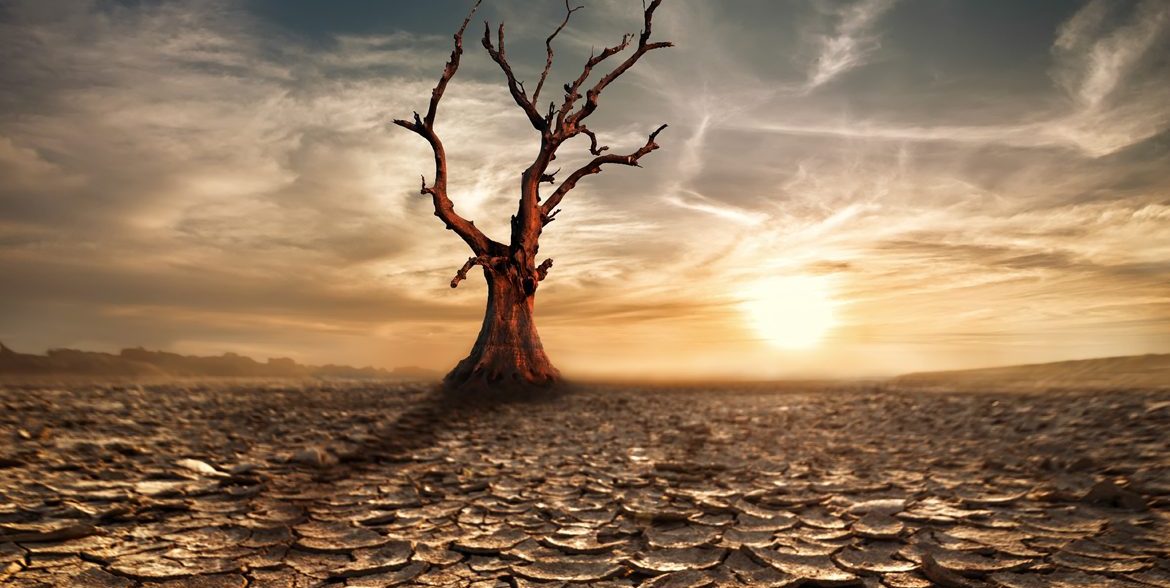
The Water Threat Looms Large
Water is a human right as well as an indispensible economic good. By 2050, Pakistan will be amongst the countries which will face acute water shortage. According to IMF reports, Pakistan ranks third in the world among countries facing water shortage. The Pakistan Council of Research in Water Resources (PCRWR) reports that the country is in danger of “running dry” by 2025.
To make matters worse, the country ranks fourth in the world in terms of high water usage, especially due to the fact that its economy is agro-based. Pakistan’s population is more than 6 times than what it was after partition in 1947, which means the demand for water has also increased. And while 95% of the water sources are used for the agricultural sectors, but the food production is still lower than that of many other agro-based countries, including the neighbouring India.
Pakistan’s water sources are finite, and on the way to being completely exhausted. The vast majority of the country (including the industrial sectors, the domestic sectors, and individual persons) depends on the Indus River, which is quickly running dry.
While the country has the world’s largest canal irrigation system, that system has several, operational and management, problems which lead to water wastage. For instance, 90% of the country’s agriculture depends on irrigation and groundwater but outdated irrigation methods being used in the agricultural sector have led to a large-scale waste of fresh water.
The severity of this issue is evident by the fact that both the Tarbela and Mangla dams have approached “dead storage levels” not once, but several times over the past 3 years. Additionally, both dams are losing storage capacity due to silt deposition. According to The Pakistan Development Review, 70% of Pakistan’s land has become semi-arid or arid. In 2018, snowfall was 50% less than its overall average over the past years
All this is evidence that Pakistan is in danger of water scarcity, which portends high concerns for the agricultural sector.
In order to solve this issue, it is necessary to understand the root-causes. A recent report by the Pakistan Academy of Sciences, has listed the following causes: the increasing population, high water consumption, low water productivity, water wastage, unattended water, low water prices, climate change, and the misuse and overuse of water in the agricultural, domestic, and industrial sectors.
To counteract the harmful impact certain policies need to be instituted on an emergency footing:
- Collecting and maintaining reliable data and information regarding water sources
- Investing in water filtration plants
- Introducing financial mechanisms for the protection of water resources
- Subsidizing the use of technology for conservation without compromising on productivity
- Eradicating the use of harmful pesticides/insecticides that require a lot of water to be washed away and introducing the use of biodegradable environment friendly fertilizers.
- Spreading awareness regarding the importance, exploitation and conservation of water resources and strict implementation of national water saving policies
- Investing in the construction of small dams across the country
- Strictly implementing policies to deter deforestation
And finally,
- Increasing family planning awareness and interventions to counter high birth rates, especially in rural areas
6 Comments
Aenean placerat, quam ac tempor congue, orci est luctus ex, ut vestibulum ipsum nisl eu nisi. Fusce eleifend mattis tortor. Vestibulum ex ex, consectetur sit amet imperdiet at.!!!
Aenean placerat, quam ac tempor congue, orci est luctus ex, ut vestibulum ipsum nisl eu nisi. Fusce eleifend mattis tortor. Vestibulum ex ex, consectetur sit amet imperdiet at
Fusce eleifend mattis tortor
Aenean placerat, quam ac tempor congue, orci est luctus ex, ut vestibulum ipsum nisl eu nisi. Fusce eleifend mattis tortor. Vestibulum ex ex, consectetur sit amet imperdiet at.
test
JOIN OUR NEWSLETTER
Comments are closed.