

Guava
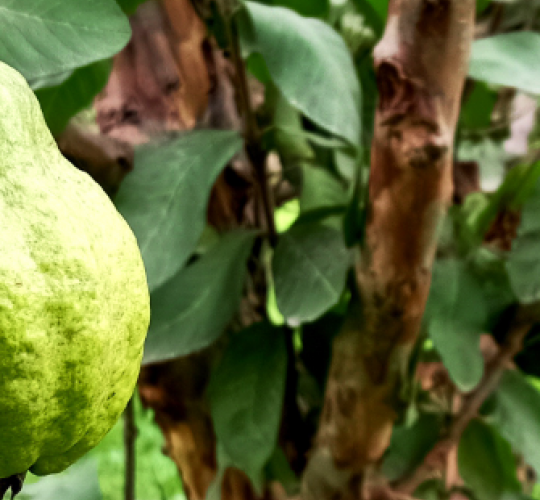
It is one of the most gregarious fruit tree species of the Myrtaceae family which has a great potential for extensive commercial production because of its cultural integration, high nutritional value and popularity of processed products.
It is usually grown in open areas, second-growth forests, and backyard or as part of a mixed orchard. Botanically, guava is a small tree that reaches a height of up to 33 feet; with spreading branches; smooth, thin, copper-colored bark that flakes off showing greenish layer beneath; trunk reaches a diameter of 25 cm.
Soil and Climatic Requirements of Guava
Guava can be grown in almost all types of soil but thrives best on well-drained clay loam to sandy loam soil rich in organic matter with PH ranging from 5.0 to 7.0. It prefers dry climate with well-distributed rainfall throughout the year, although it is somewhat drought tolerant. For fruit production, it is recommended that guava trees are not planted in areas with high wind velocity.

Land Preparation
Land is prepared during the summer season by ploughing, harrowing, levelling and removing weeds.
Planting
Planting Material
Plants are vegetative, propagated by budding, inarching or air layering.
Planting Season
Plants are vegetative, propagated by budding, inarching or air layering.
Spacing
The plants are usually planted at a distance of 5-8 m. The exact planting distance is decided according to variety, soil fertility and availability of irrigation facilities.
Standard spacing is 6 m. x 6 m. accommodating 112 plants/acre. By increasing the plant density, productivity can be increased. A spacing of 6 m. x 6 m. with a population of 110 plants per acre was commonly observed in areas covered during a field study and is recommended.
High density planting causes erect growth of branches making the plant tall, compact and also gives higher yield/unit area in early years of fruiting.
Planting Method
Square system of planting is generally adopted. Pits of 1x1x1m. size are dug in March and September and filled with a mixture of farmyard manure and soil.
Nutrition
Time of fertilizer application depends on the region and crop variety. Fertilizer is applied in the first week of May for rainy season crop and in first week of July for winter season crop.
The plants are manured twice a year: first, during June-July and second, during October. A fertilizer dose of 600 g. Nitrogen, 400 g. Potash is recommended.
Irrigation
Guava is mostly grown under rain fed conditions. During winter season, irrigation is provided at an interval of 20-25 days and in the summer months it is provided at an interval of 10-15 days by the ring method.
Training & Pruning
Training of plants in young stage is essential in order to build a strong framework and to avoid weak crotches. Fruiting trees are pruned to check overcrowding in the orchard. The plants are trained as low headed trees to facilitate multiple hand pickings. Pruning is usually recommended after harvesting or in spring. Summer pruning is generally avoided as the plants get damaged due to sun burn.
Intercultural Operations
Weeds are usually removed by shallow cultivation. Green manuring is usually done during rainy season. Pre-emergence use of diuron (1.6 kg. /ha.), oryzalin (1.67 litres/ha.), simazine (1.6 kg./ha.) or atrazine (1.6 kg./ha.) has been found to be effective in control of weeds in guava orchards.
Mulching
Dry leaves or straw are used as mulching material. Mulching can also be done either with black polyethylene sheet or with organic materials.
Mulching the soil at least twice a year helps in conserving moisture and improving the fruit quality.
Inter-Cropping
Leguminous crops or vegetable can be grown as intercrops during the first three years of planting provided irrigation facility is available.
Plant Protection Measures
Insect Pests
The insect pests mostly observed are fruit fly, stem borer, bark eating caterpillar, thrips, nematodes, mealy bug and scale insect.
Spraying with malathion (2ml.), phosphamidon (0.5ml. per ltr. of water), monocrotophos, dimethoate etc. has been found to be effective in most cases.
Apart from that adoption of suitable cultural practices and destruction of infected plants needs to be done.
Diseases
The main diseases reported are wilt, fruit canker, fruit rot, anthrachose and grey leaf spot.
Application of Carbendazim / Thiophanate methyl(1g./l) or Kavach / Mancozeb (2 g/l) depending upon the type of infection has been found to be effective in controlling the diseases.
Disorders
Fruit drop is a serious disorder in guava resulting in about 45-65% loss due to different physiological and environmental factors.
Spraying of GA has been found to be effective in reducing the fruit drop in guava.
Bronzing of guava has been observed in places having low soil fertility and low pH. Affected plants show purple to red specks scattered all over the leaves.
Under aggravated conditions, total defoliation and fruits characterized with brown colored patterns on the skin, with reduced yield are noticed.
Foliar application of 0.5% ammonium phosphate and zinc sulphate in combination at weekly intervals for two months reduces the bronzing in guava.
Pre-flowering sprays with 0.4% boric acid and 0.3% zinc sulphate increase the yield and fruit size.
Spraying of copper sulphate at 0.2 to 0.4% also increases the growth and yield of guava.
POST HARVEST MANAGEMENT
Grading
Fruits are graded on the basis of their weight, size and color.
Storage
The fresh fruit has a short shelf life and distant marketing can be done only if it is properly stored.
The shelf life can be extended up to 20 days by keeping them at low temperature of 5°C and 75-85% relative humidity.
It can be stored for about 10 days at room temperature (18-23°C) in polybags providing a ventilation of 0.25%.