

Wheat
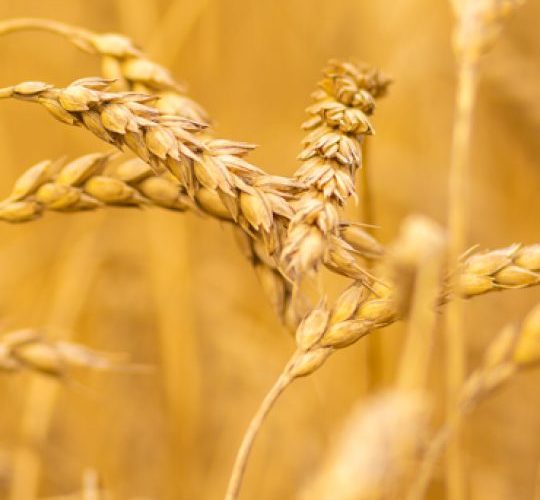
Wheat
Suitable varieties
Ujala 2016, Joher 2016, FSD 2008
Method of sowing
Mechanical sowing with seed driller and happy seeder zero tillage is both efficient and protects the nutrients in the soil.
Land
Preparation
Drill Sowing
Before sowing begins, the field should remain dry for fifteen days and should not be irrigated. At field capacity rotavate the land and then apply Disc Harrow to chop up any weeds and unwanted crop remains. Apply cultivator with planker once and before drill sowing.
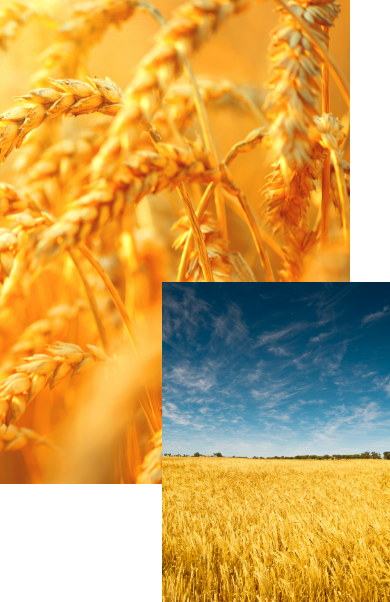
Innovation
Happy Seeder (Zero Tillage) Cultivation
After cultivation of rice the crop residues spread over the field and zero tillage sowing is undertake using Happy Seeder. This will not only result in savings in the expenses associated with land preparation but will also be beneficial for the soil.
Requirements
Raw Material Requirements.
Seed:
50 Kg If Seed Germination Rate Is 70%.
Fertilizer:
1.5 Bags DAP, 2 Bags Urea, 1 Bag SOP, 3 Trolee FYM (Fully Decomposed). Znso4 6Kg: 33%
Seed:
1.5 Bags DAP, 2 Bags Urea, 1 Bag SOP, 3 Trolee FYM (Fully Decomposed). Znso4 6Kg: 33%
- Znso4 6Kg: 33%
- Boric Acid 2.5kg: 17%
Labour: At 45 acres of wheat cultivation one field labourer on a permanent basis and two on a daily wage basis may be acquired. Labour requirements are attendant upon fertilizer and spray application processes.
Soil & Climate
Silt clay, silt clay loam are the best soil textures for the growing of wheat crop. It grows best when temperatures range from (21° to 24° C). Wheat also needs a lot of sunshine, especially during grain formation. Areas with low humidity are better since many wheat diseases thrive in damp weather.
Seed Treatment:
Seed treatment is essential with suitable fungicide to preserve seed from different fungal diseases. Apply 2ml of Derosil 2ml for every kilogram of seed.
Crop Maintenance
Irrigations Application:
Four cycles of irrigations are required for the wheat crops. Wheat needs 12 to 15 inches of water to produce a good crop. Irrigation cycles depend on weather conditions, the amount of rainfall and the temperature. The recommended schedule for the four cycles of irrigation is as follows:
- 1st irrigation 25 days after sowing.
- 2nd irrigation 60 days after sowing.
- 3rd irrigation 90 days after sowing.
- 4th irrigation 110 days after sowing.
Fertilizer Application:
- At the time of sowing 1.5 bag DAP, 0.5 Bag urea and 1 bag SOP should be applied at the base of the crop.
- During the first or second irrigation cycle, one bag of urea may be applied.
- As grain is forming Zinc and Boron should be applied.
The schedule for the application of fertilizer is as follows:

Note:
These recommendations are for the soil having O.M (0.86-1.29) Phosphorus (7-14 ppm) potash (80-180ppm).
Weeding:
Weeds affect 20-25 percent of wheat yield. Common weeds include dumbi sitti, jangli jai, jangli palak, and pohli.
- Chemical Control: Suitable Pre emergence herbicide should be applied.
- Environmental Control: It is recommended that crop rotation should be done for wheat fields in two to three years.
Potential Threats:
Pests that affect the wheat crop include Aphids, Borer, Thrips, Cereal Leaf Beetle, and Wheat Stem Maggot.
Chemical Control: Suitable insecticide should be applied in case of an outbreak. Thiamethaxum and cloriperifast are effective against pests that adversely affect the wheat crop.
Disease
Wheat Rusts
These are amongst the most destructive diseases globally and have the ability to destroy the entire wheat crop and to form new mutations that can attack previously resistant cultivars. Wheat rusts are the most devastating and harmful among all of wheat diseases. Leaf rust, stem rust, and stripe rust are the three rust diseases of wheat. These diseases have the capacity to move long distances with the potential to develop rapidly under favourable environmental conditions resulting in serious yield losses. Weather plays a key role in the development of rust epidemics. Cool nights followed by warm days and long periods of dew or a wet wheat canopy are ideal conditions for rust to flourish. Under unsuitable conditions the disease does not flourish.
Chemical Control
The disease can be controlled through the use of any suitable fungicide (Tilt).
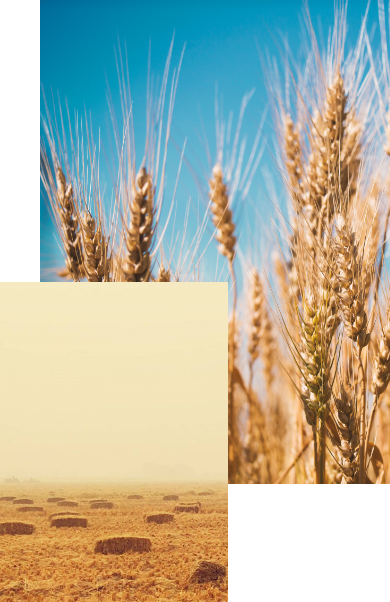
Natural
- Disaster
- Frost
- Damage
- Hale storm
Harvesting:
Between 2nd and 3rd week of April
Wheat is harvested during the second and third week of April, when the grain has attained a hard stage, retains 20-25% grain moisture, and the entire crop gives a straw coloured appearance. Harvesting of wheat should be done using a combine harvester. In the case of rain, harvesting should be put on hold until the weather conditions became more favourable for harvesting. A channel has to be prepared to allow the accumulated rainwater to drain out.
Managing The Harvested Crop:
Harvested wheat will be transported in trolley attached to a tractor. Care should be taken during the loading and unloading process and suitable arrangements should be made for the labour involved.
Land Clearing
The remains of wheat will be chopped with the help of a chopper. Good management of crop residue has potential benefits including control over erosion and efficiency in irrigation.
Potential By-Product
The crop residue is chopped up for increasing organic matter or for making bales of straw which have a variety of uses including fodder and bedding for livestock, fuel and thatching for roofs.
Required Field Implements
- Cultivator
- Rotavator
- Laser Leveller
- Combine Harvester
- Pressing Machine for making bales of straw
- Tractor and Trolley
Crop Timeline
The total duration involved in wheat cultivation, from seed to maturity of grain, is between 120-130 days. The sowing starts in the middle of November and the crop is harvested in April, between the 10th and 20th of the month.