

Rice
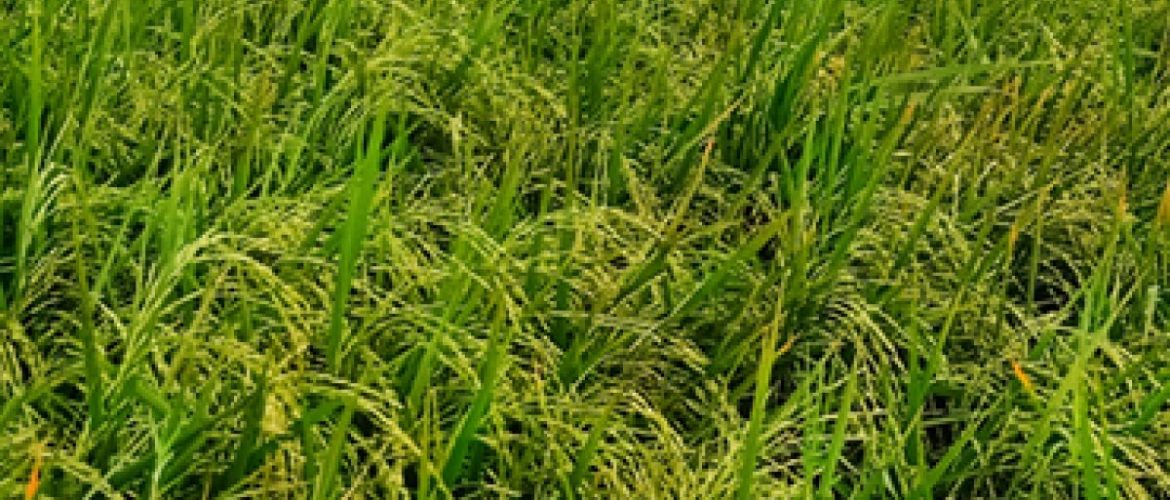
Crop Timeline
Date of sowing the nursery
2nd to 3rd week of June
Harvesting time
Between 2nd and 3rd week of October
Variety
Kissan Basmati
Kissan basmati 1509 is the first early maturing Basmati rice variety with seed-to-seed maturity of around 100 to 120 days
Land Preparation For Nursery
Land must be levelled before developing the nursery.
Method Of Sowing
Traditional method: make a small plot and spread seeds. After spreading seeds, spread FYM on seeds.
Nursery Maintenance
Irrigations should be done after a 3-day interval.
Weedicides
Vinsta
Land Preparation For Transplanting
After the possible harvest of another crop like wheat, from the field, the field is gone over twice by the cultivator. Where necessary, a rotavator might also be used. Land must be levelled by lazer technology. For transplanting of nursery, water the field to create the puddle condition before using a planker in the field drawn either by a tractor or in the case the latter isn’t available, by a bull. Shallow transplanting at 1-2 cm depth is recommended.
Transplantation
The best time of transplanting of nursery is after one month of sowing. Timely transplantation is critical and two plants per hill is recommended. For one acre of land, 80,000 hills and 160,000 plants are the recommended numbers. The recommended distance between plants is 9 inch.
Requirements
Raw material requirements
- Fertilizer
- Potash =1 bag
- MAP = 2 Bag
- Borax = 3 kg
- Urea = 2 bag
- Zink sulphate = 33% = 6 kg
For cocoly trial
- 2.5 cocoly
- 1.5 Kg Zink
- Insecticides
- 0.5 bag Potash
- Weedicides
- 0.5 MAP
- Fungicides
Seeds
- 8 kg per acre
Labour
- Permanent labour requirement: 2 persons.
Daily Labour
- Labour required for transplanting
- Labour required at harvesting time = 4 persons
- Labour required for pressing and transportation straw = 5 persons
Soil & Climate
Silt clay, silt clay loam and clay are the best soil textures for the cultivation of rice crop. The best soil for rice crop is fertile riverine alluvial soil. Addition of farm yard manure is the best way of increasing organic matter in soil. The best time of farm yard manure is 1 month before sowing of crop. After application of farm yard manure, and using plankers to spread it evenly in the field, the field is lightly irrigated to attain the proper condition whereby the ploughing becomes easier through the use of cultivator. Farmyard manure is therefore, mixed by cultivator.
Chemistry
Fertilizer
- MAP = 1 Bag = 46 kg = all DAP applied during sowing time
- Urea = 2 bag=46%=92=46 kg = 1 bag is applied after 15 to 20 days of sowing the remaining
- Urea applied after 40 to 50 days after sowings SOP =1 bag =all quantity applied during sowing time
For Trial
- SOP = 0.5 Bag = 25 kg
- P=3%
- K=5%
- Cocoly = 2.5 Bags
- N=15%
- MAP (N=12 % P=61%) = 0.5 bag
- Urea = 46 % = 0.5 bag
Fertilizer application
Application at base
- Cocoly = 1 bag = 20 kg
- MAP = 0.5 bag = 25 kg
- SOP = 0.5 Bag = 25 kg
First application
- Cocoly = 0.5 bag = 10 kg
- Urea = 12.5 kg
- Zinc 1.5 kg
Second application
- Cocoly = 0.5 bag = 10 kg
- Urea = 12.5 kg
Crop Maintenance
Number of Irrigations
Up to sixteen (16) irrigation cycles are required to grow rice. It is majorly dependent on the land water retention capacity so it varies from area to area. The thumb rule is that the soil should not crack due to the heat of the summer temperatures. There are four critical stages of Rice crop after transplantation.
- Tillering
- Panicle Initiation
- Heading
- Flowering
For Seed
(Rouging or uprooting off-type varieties)
Controlling Weeds
Weeds are a major concern for high productivity in aerobic rice crop. The pre planting herbicides like pendimethiline, stamp should be applied immediately after seeding. Then, at 30-35 days after sowing, when maximum weeds appear, post-emergence herbicides like clover can be used for effective control of grass weeds. For the control of deela etc, sunstar may also be used.
Potential Threats
Pests
- Grass hopper
- Yellow borer
- White borer
- Striped borer
- Pink borer
- Leaf folder
- Army worm
- Cut worm
- Aphid
Control
Fapronil 480 ml per acre or biphenthrine 250 ml per acres
Disease
- Bacterial blight
Causal organism Xanthomonas oryzae pv. oryzae = X. campestris pv. Oryzae
Symptoms
It causes wilting of seedlings and yellowing and drying of leaves. The disease is most likely to develop in areas that have weeds and stubbles of infected plants. It can occur in both tropical and temperate environments, particularly in irrigated and rain-fed lowland areas. In general, the disease favors temperatures at 25−34°C, with relative humidity above 70%. Bacterial blight can be severe in susceptible rice varieties under high nitrogen fertilization. Check for wilting and yellowing of leaves, or wilting of seedlings. On seedlings, infected leaves turn grayish green and roll up. As the disease progresses, the leaves turn yellow to straw-colored and wilt, leading to whole seedlings drying up and dying. To distinguish kresek symptoms from stem borer damage squeeze the lower end of infected seedlings between the fingers. Kresek symptoms should show yellowish bacterial ooze coming out of the cut ends. Unlike plants infested with stem borer, rice plants with kresek are not easily pulled out from soil.
Control
Use of potash or sulphur 800 g per acre or copper oxychloride 500 g or 250 g copper hydrooxychloride
- Alternaria leaf spot
Above-ground plant tissues at the seedling stage or on leaves of older plants show oval to circular spots, 3-10 mm in diameter. Lesions are tan, later becoming grey to white with a narrow, dark-brown border. Sclerotia appearing as small, black dots are produced in the center of older lesions on all infected parts. Alternaria padwickii is an asexually reproducing fungus that infects seeds of rice. It is one of several fungi responsible for seed discoloration, seed rot and seedling blight, but has also been detected as a sheath-rotting pathogen.
Control
Trifloxystrobin + tubaconazole 65 g or diphenaconazole 125 g or sulphur thivate
- Rice blast
Symptoms
Elliptical, whitish to grey lesions with dark-green to reddish-brown margins, up to 2 cm long form on leaves, which can coalesce and kill the leaf. Lesions can also occur on the leaf collar, culm and panicles. Under favourable weather, the fungus produces fructifications amphigenously on the leaf lesions. This disease occurs due to shortage of water.
Control
Trifloxystrobin + tubaconazole 65 g or diphenaconazole 125 g
- Natural disaster
Rice crops are also susceptible to natural disasters which are difficult to predict or plan for.
Harvesting
Timeline
Second to third week of October. Rice should be harvested 30 days after flowering. There should be 20-25% grain moisture, 80-85% of the crop should be straw-colored and grain should be in the lower part of panicle in hard dough stage. It is harvested by sickle or more easily through advanced combine harvester.
Managing The Harvested Crop
The harvested rice should be transported in a trolley attached to a tractor. Additional labour may be required for unloading the trolley.
Land Clearing
The remains of rice will be chopped with the help of chopped
Potential By Product
Chopped for increasing organic matter or making bundles
Requirements Of Field Implements
Chopped for increasing organic matter or making bundles
- Cultivator
- Rotavator
- Lazer leveller
- Combine harvester
- Pressing machine (to make bundle of straw)
- Tractor, trali
- Weather